Licensed U.S. retail desk — HoneyPower180-day money-back window60 capsules · two a day$1.63 a day
Honey-powerLabel · Doses · SourcesOrder

The six, one at a time, and what each would have to be measured against

Pure honey, panax ginseng, maca root, tribulus terrestris, horny goat weed and black pepper extract — what each is documented for, what the research dosed, and why not one of the six can be compared against it.

01What is actually known

Quick answer

Six ingredients are named. Nothing else about the formula is established by the supplied material.

No amount, no blend total, no extract ratio, no standardisation, no plant part for four of the six, and no species for the horny goat weed. Those are not pedantic details — a root and a leaf of the same plant are different products, and a 10:1 extract is a different thing again from the raw powder.

What follows is each of the six, what it is, what the literature doses it at, and the blank where this label’s figure would go.

02The six, one at a time

No card carries a photograph, because the pack supplied no ingredient stills and a stock image of a root proves nothing about a capsule.

1 of 6

Pure Honey

On this label
Not listed on the pack
In the research
no published daily dose found
Can the two be compared?
No. One of the two numbers is missing.

Its clinical monograph has dosing entries for cough and for allergy, and none for anything this product is sold for.

Named first on the sales page and first on the listing graphic.

Honey →
2 of 6

Panax Ginseng

Panax ginseng

On this label
Not listed on the pack
In the research
500 mg
Can the two be compared?
No. One of the two numbers is missing.

The bottom of the crude-root range used in clinical trials, 0.5 to 3 g a day. Extracts are given at 100 to 400 mg.

Named on the sales page. No part, no extract ratio, no standardisation.

Ginseng, Panax →
3 of 6

Maca Root

Lepidium meyenii, root

On this label
Not listed on the pack
In the research
3,000 mg
Can the two be compared?
No. One of the two numbers is missing.

The dose that worked in the study that tested two. 1,500 mg a day did not.

Named on the sales page.

Maca →
4 of 6

Tribulus Terrestris

Tribulus terrestris

On this label
Not listed on the pack
In the research
250 mg
Can the two be compared?
No. One of the two numbers is missing.

The bottom of the usual daily dose, 250 to 750 mg — at which controlled trials found no more effect than placebo.

Named on the sales page.

Tribulus →
5 of 6

Horny Goat Weed

Epimedium species

On this label
Not listed on the pack
In the research
250 mg
Can the two be compared?
No. One of the two numbers is missing.

The smaller of the two capsule sizes the monograph lists, taken one a day.

Named on the sales page. No species, no icariin figure.

Horny Goat Weed →
6 of 6

Black Pepper Extract

Piper nigrum

On this label
Not listed on the pack
In the research
15 mg
Can the two be compared?
No. One of the two numbers is missing.

Not a benefit dose. The amount of piperine that measurably changed how fast volunteers cleared prescription drugs.

Named on the sales page. No piperine figure and no standardisation.

Piperine Drug Interactions →

No card above carries a photograph of its ingredient. The pack supplied none, and a stock photograph of a root is not evidence that the root is in the capsule — nor of how much. The six names are the seller’s; the research figures are from the sources named on each card, every one of which was opened while this page was written.

03Why “Extract” on its own tells you very little

Two of the six are named as extracts — black pepper extract and, on the graphic, panax ginseng. An extract is a concentrate, and the only thing that makes a concentrate meaningful is its ratio and its standardisation.

The ratio

A 10:1 extract means ten parts raw material made one part extract. 50 mg of a 10:1 extract is not 50 mg of the plant, and it is not comparable to a study that dosed the plant.

No ratio was supplied for either.

The standardisation

Good extracts state the marker compound and its percentage — for black pepper that would be piperine, for ginseng the ginsenosides, for horny goat weed the icariin.

No marker and no percentage was supplied for any of them.

The part

Root, leaf, bark, fruit and aerial parts have different chemistry. Maca root is named as root. The other five name no part at all.

One of six names its part.

None of this is unusual, and none of it is unlawful — a marketing graphic is not a label. It is simply the reason that six names is a starting point for a question rather than an answer to one.

Licensed U.S. retail desk — HoneyPower

Six bottles is $1.63 a day, and exactly 180 days

$294.00 total, free shipping, and the last capsule falls on the last day of the 180-day window.

Order now, $1.63 a dayWhat was and was not priced

  • 180-day money-back window
  • Free shipping on the six-bottle pack
  • Two capsules a day, 60 to a bottle
  • Licensed U.S. retail desk — HoneyPower

This site holds no stock and takes no payment. Only the six-bottle price was supplied to it; the one- and three-bottle totals are set at the checkout and are not printed here, because inventing them would be worse than omitting them. Whatever the sales page shows at the moment you check out governs.

04What the FTC says about comparing doses

This site keeps putting a label figure next to a study figure, so it is worth saying where that habit comes from. The FTC’s health products guidance asks advertisers, in terms: How do the dosage and formulation of the advertised product compare to the product used in the study?

It goes on: If there are significant discrepancies between research conditions and the real-life use being promoted, advertisers must evaluate whether it is appropriate to extrapolate from the research to the claimed effect.

05The panel this would all be settled by

Supplement Factsthe panel this pack did not contain
Serving SizeQ52 capsules
Servings Per ContainerQ330
Ingredient, as named on the sales pageAmount Per Serving%DV
Pure HoneyNot listed on the packNot listed on the pack
Panax GinsengPanax ginsengNot listed on the packNot listed on the pack
Maca RootLepidium meyenii, rootNot listed on the packNot listed on the pack
Tribulus TerrestrisTribulus terrestrisNot listed on the packNot listed on the pack
Horny Goat WeedEpimedium speciesNot listed on the packNot listed on the pack
Black Pepper ExtractPiper nigrumNot listed on the packNot listed on the pack

Every blank above is a figure FDA’s labeling guide requires the real panel to carry. Question 30: You must list the quantitative amount by weight per serving immediately following the name of the dietary ingredient. Question 3: You must list the names and quantities of dietary ingredients present in your product. If the six sit inside a proprietary blend, Question 34 requires the blend’s total weight on the same line and its ingredients listed beneath it in descending order by weight.

Nothing on this page is a reproduction of HoneyPower’s panel. No such panel was supplied to this site, so nobody here has seen one. This is the shape of the document you are owed, printed so that you can check a real bottle against it.
06Sources for this page

  1. HoneyDrugs.com natural products databaseComposition and dosing. Glucose and fructose together make up roughly 65% to 80% of honey. Every dosing entry in the monograph is for cough or for allergy; there is none for vitality, stamina or sexual function. Honey is “not recommended in children younger than 12 months due to increased risk of botulism”.
  2. Ginseng, PanaxDrugs.com natural products databaseDosing and interactions. In clinical trials “the dosage of crude root has ranged from 0.5 to 3 g/day” and “the dose of extracts has generally ranged from 100 to 400 mg”. It may “enhance the adverse/toxic effect of anticoagulants” and “enhance the hypoglycemic effect of hypoglycemia-associated agents”; “the QTc interval may be increased”. On the evidence: “Limited high-quality clinical trials have been conducted, and systematic reviews include data from very few studies.”
  3. MacaDrugs.com natural products databaseDosing. A small study (n=16) “reported a dose dependent effect with high dose maca (3000 mg day)” improving SSRI-induced sexual dysfunction “while low-dose maca (1500 mg/day) did not”. Doses of 3.5 g daily have been used in postmenopausal women. “Although its efficacy is not proven, some athletes have used maca as an alternative to anabolic steroids.”
  4. TribulusLiverTox, National Institute of Diabetes and Digestive and Kidney DiseasesDose and efficacy. “The usual daily dose is 250 to 750 mg daily.” On whether it works: “in controlled trials, improvements in sexual function were no greater with Tribulus terrestris extracts than with placebo.” Liver-injury likelihood score E*, with case reports including a man whose creatinine rose from 1.1 to 3.1 mg/dL.
  5. Horny Goat WeedLiverTox, National Institute of Diabetes and Digestive and Kidney DiseasesDose and efficacy. It “is available in multiple forms in tablets and capsules of 250 or 500 mg, the usual dose being one tablet or capsule daily.” Clinical effects “have not been proven in rigorous prospective controlled trials”, and a cited review found “a dearth of evidence of any activity”.
  6. Piperine Drug InteractionsPharmacy TimesThe interaction evidence for black pepper extract. At 20 mg a day for 10 days piperine raised carbamazepine exposure (AUC) by 48%, diclofenac by 68% and fexofenadine by 68%; at 15 mg a day for 3 days it prolonged midazolam’s half-life and deepened its sedation. The mechanisms named are inhibition of CYP3A4, CYP2C9 and P-glycoprotein.
  7. Dietary Supplement Labeling Guide, Chapter IV: Nutrition LabelingU.S. Food and Drug AdministrationThe document this whole site is about, and the reason the absence of a panel matters. Question 30: “You must list the quantitative amount by weight per serving immediately following the name of the dietary ingredient.” Question 3: “You must list the names and quantities of dietary ingredients present in your product.” Question 34 covers proprietary blends, which must carry the total weight of the blend and list its ingredients in descending order by weight. The guidance is marked “Contains Nonbinding Recommendations.”
  8. Health Products Compliance GuidanceU.S. Federal Trade Commission“How do the dosage and formulation of the advertised product compare to the product used in the study?” and “If there are significant discrepancies between research conditions and the real-life use being promoted, advertisers must evaluate whether it is appropriate to extrapolate from the research to the claimed effect.”

Licensed U.S. retail desk — HoneyPower

One pack was priced. This is it.

Six bottles at $49.00 each, $294.00 in total, free shipping. That is $1.63 a day and $0.82 a capsule across 180 days — the same number of days as the money-back window.

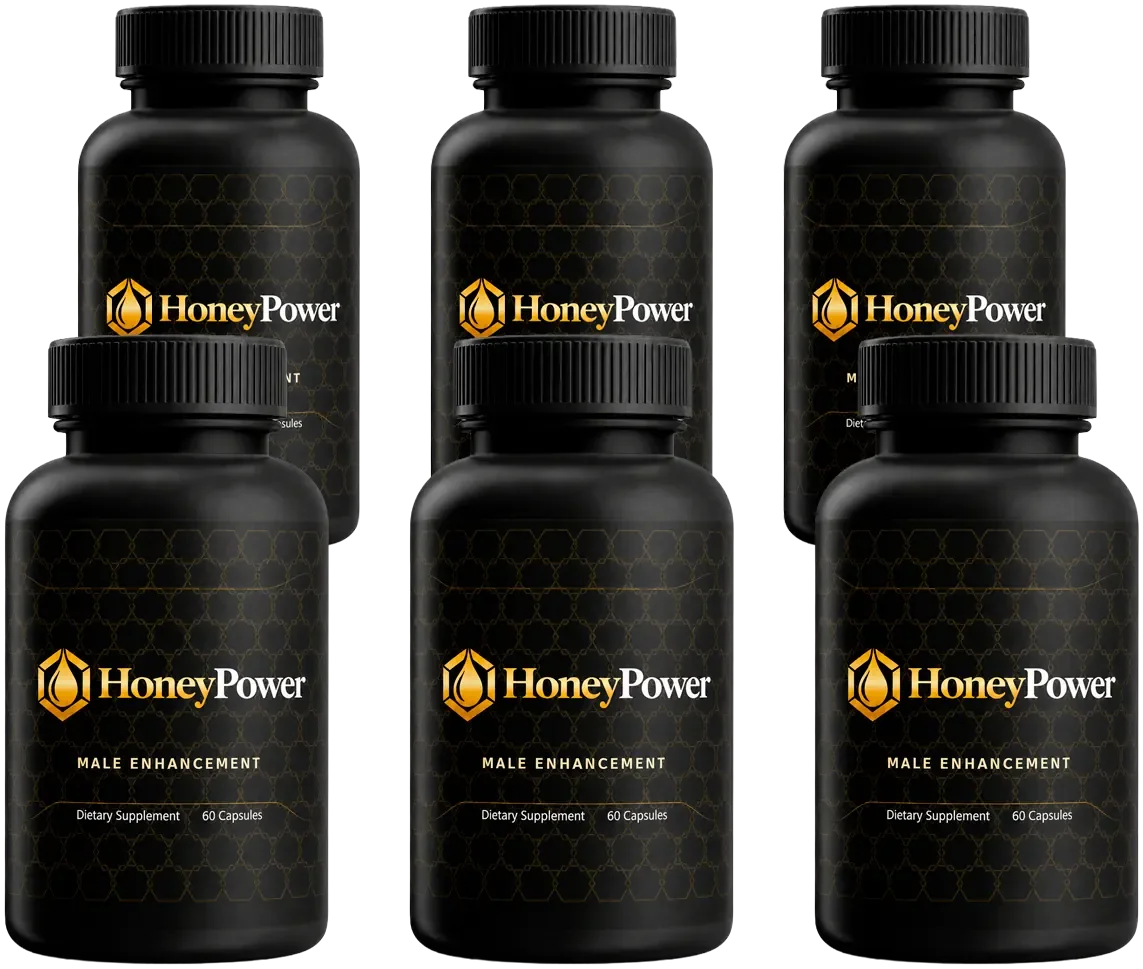
Six HoneyPower bottles.
The only price supplied
$294.00$49.00 each · free shipping
Capsules
360
Days at 2 a day
180
A day
$1.63
A capsule
$0.82
Order the six-bottle pack
  • 1 bottle60 capsules · 30 days no price supplied
  • 3 bottles180 capsules · 90 days no price supplied

What was and was not priced

  • 180-day money-back window
  • Free shipping on the six-bottle pack
  • Two capsules a day, 60 to a bottle
  • Licensed U.S. retail desk — HoneyPower

This site holds no stock and takes no payment. Only the six-bottle price was supplied to it; the one- and three-bottle totals are set at the checkout and are not printed here, because inventing them would be worse than omitting them. Whatever the sales page shows at the moment you check out governs.

What this page was checked against

Every figure on it is transcribed from the supplied Supplement Facts panel and checked-out pack, derived by arithmetic from those, or taken from a source on the references page.

Medically reviewed byDr. Landon Trost, MD, Physician
RoleMedical reviewer
Review dateOctober 12, 2026
Revised